
Privatisation of old oil fields to raise output and reduce India's import dependence was advised by the Economic Survey.
The government said on Monday it is examining whether domestic petrol and diesel prices can be reduced in line with the fall in global crude oil prices.

Investors' sentiments will be guided by a host of domestic and global macroeconomic data announcements this week, along with the trading activity of foreign investors and trends in world stocks, analysts said. Besides, the rupee-dollar trend and movement of global oil benchmark Brent crude will also be crucial in dictating terms in the market, experts added.
Stressing that there was no alternative except to raise the prices of petroleum products, Union Finance Minister, P Chidambaram, has said the oil companies will incur a loss of Rs 30,000 to Rs 40,000 crore.
Reliance Industries' refining earnings will remain steady, supported by its position as India's largest importer of Russian crude and favourable global supplies, according to analysts at JM Financial and Goldman Sachs. Reliance imported more Russian barrels than any other Indian refiner in the past eight months, according to data from Bloomberg/Kpler.

The Indian economy will grow at around 6.5 per cent in the current fiscal, notwithstanding high crude oil prices and increased uncertainty due climate changes, NITI Aayog member Arvind Virmani said on Thursday. Virmani also asserted that the gross household savings ratio in India has consistently gone up. In an interview with PTI, he said: "My growth projection (of India's GDP growth) is 6.5 per cent plus minus 0.5 per cent... because my experience is that the fluctuations in global GDP more or less has balanced out for us, assuming normal changes."
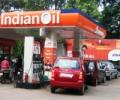
State-owned Indian Oil Corp (IOC) on Tuesday said it is losing about Rs 3 on the sale of every litre of petrol, but will decide on raising prices at an "appropriate" time.

Global trends, trading activity of foreign investors and movement of oil benchmark Brent crude would dictate terms in the domestic markets this week, analysts said. Equity markets, which fell nearly 3 per cent last week, may face volatile trends amid the monthly derivatives expiry on Thursday. "This week marks the September month Futures and Options (F&O) expiry, which is expected to bring about volatility in the market," said Santosh Meena, Head of Research, Swastika Investmart Ltd.

Even as the Group of Seven (G7) price cap on Russian crude oil enters into force as of December 5, India has been assured it will continue to receive the existing deep discounts on Russian oil, for the time being, informed officials. "We have been assured by our Russian partners of uninterrupted crude supplies at the existing rates for the time being. "There were a lot of reports of changes in (India's) buying patterns after the global price cap took hold.

Shares of low-cost airline IndiGo hit record high on the bourses soon after reports of pilot crisis at Vistara emerged. The development also saw airfares surge by around 25 per cent on select routes. Shares of IndiGo hit a lifetime high of ~3,68.5 on April 2, 2024, and has gained 2.4 per cent on the bourses in April.

Jet fuel or ATF price on Wednesday was cut by almost 6 per cent after four rounds of monthly increases since July, while commercial cooking gas (LPG) rates were raised by a steep Rs 101.5 per 19-kg cylinder in line with international benchmarks. However, the price of domestic LPG - used in household kitchens for cooking purposes - remained unchanged at Rs 903 per 14.2-kg cylinder. Aviation turbine fuel (ATF) price was cut by Rs 6,854.25, or 5.79 per cent, in the national capital to Rs 111,344.92 per kl from Rs 118,199.17, according to a price notification of state-owned fuel retailers.
Surging global crude oil prices failed to shore up customs revenue substantially as India Inc resorted to advance licence scheme, which allows duty-free imports for value-added exports.

Wholesale price inflation remained in the negative territory for the fourth month in a row in July at (-)1.36 per cent, even though prices of food items, especially vegetables, skyrocketed. The inflation, however, has inched up from (-)4.12 per cent recorded in June fuelled by 62.12 per cent rise in vegetable prices. In July last year, wholesale price index (WPI) was 14.07 per cent.

Signs of a strong pickup in hiring by companies are adding to the rosier outlook for Indian households.

Top government officials in New Delhi have started discussions with stakeholders ranging from shipping and container companies to export promotion councils to understand the impact of the Iran-Israel tensions and plan ahead. Inter-ministerial talks are also being lined up amid the crisis situation in West Asia, sources confirmed. While the crude flows are not directly under any threat, elevated oil prices remain a concern, according to officials.

By driving a hard bargain with Russia in procuring crude oil at the lowest price possible, India is furthering the policy of G7 and Washington is "comfortable" with New Delhi over its approach in addressing issues relating to energy security, a top Biden administration official said.

'From tariff tensions and border skirmishes to unrest in West Asia.' 'The worst may be behind us. But any further upmove will now have to come from earnings.'
With international crude oil prices spiralling to a 12-year high at over $37 a barrel, Petroleum Minister Ram Naik pinned hopes on Finance Minister announcing some fiscal measures to avoid a certain increase in prices of petroleum products,

Implementation of Kirit Parikh Committee recommendations looks bleak and the industry's expectation that all petroleum products including crude oil & natural gas should be included under GST is set to be turned down.
Amid the crisis in Libya, increase in fuel prices would become 'inevitable' if crude oil remains at $100 per barrel, Prime Minister's Economic Advisory Council chairman C Rangarajan said on Monday.

The US Fed interest rate decision, global trends, tariff-related developments and trading activity of foreign investors will drive the equity market movement this week, analysts said. Among macroeconomic data announcement, WPI inflation for February is scheduled to be announced on Monday.

'The biggest near-term risk to Indian equities is the outflow of investments to China as tactical trades by foreign investors.'
India's imports of crude oil from Russia touched a new high of 1.64 million barrels per day in March and is now double of the purchases from Iraq - the nation's traditional top oil supplier. But the purchases appear to have plateaued as growth has slowed. Russia continued to be the single largest supplier of crude oil, which is converted into petrol and diesel at refineries, for a sixth straight month by supplying more than one-third of all oil India imported, according to energy cargo tracker Vortexa.
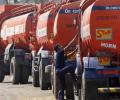
Every time the Indian economy has faced headwinds due to international developments, the oil sector has played a crucial role, explains A K Bhattacharya.

Petrol and diesel prices on Wednesday were hiked by 80 paise a litre each for the second day in a row since the ending of an over four-and-half month hiatus in rate revision. Petrol in Delhi will now cost Rs 97.01 per litre as against Rs 96.21 previously while diesel rate has gone up from Rs 87.47 per litre to Rs 88.27, according to a price notification of state fuel retailers.

Marico reported consolidated revenue growth of 20 per cent year-on-year (Y-o-Y) during the January-March quarter (Q4) of FY25. Domestic revenue surged 23 per cent Y-o-Y, while volume growth was 7 per cent. International growth stood at 11 per cent (16 per cent in constant currency growth).

India's economic growth will be above 6 per cent in the current fiscal as the country has managed to strengthen its macroeconomic stability and performance even in a period of large global shocks, RBI Monetary Policy Committee (MPC) Member Ashima Goyal said on Monday. Goyal further said that a global slowdown reducing India's export growth, geopolitics fueling oil and food prices, and erratic weather are some of the continuing risks that the country faces. "India has managed to strengthen its macroeconomic stability and performance even in a period of large global shocks.
Crude oil prices are expected to rise this year as Iranian oil sanctions will lead to a drop in oil supply.
The shares of oil marketing companies have been firming up in the current financial year though the Indian crude oil basket is quoting above $65 a barrel, as investors took long-term.

Global trends, macroeconomic data announcements and the start of the earnings season would be the major drivers for the equity markets in a holiday-shortened week, analysts said. Equity markets will remain closed on Thursday for Eid-Ul-Fitr. Trading activity of foreign investors, rupee-dollar trends and crude oil prices would also guide trends in markets.

In one of the steepest increases since daily price revision was started, petrol price on Thursday was hiked by 25 paise per litre and diesel by 30 paise as oil companies raised rates for the third straight day to pass on to consumers the increase in international oil prices.

Stock markets will be largely driven by global trends in the absence of any major domestic triggers this week, say analysts. The trading activity of foreign investors, global crude oil prices and rupee-dollar movement will also influence market movement, they said. "Anticipating a period of consolidation in the absence of clear global cues, the market's trajectory will likely hinge on the movement of the US bond yields, the dollar index, and crude oil prices, as well as institutional flows.
World oil prices shot up to $55 per barrel on Friday following a warning by global investment bank Goldman Sachs that crude oil might have entered a 'super-spike' period which can push up oil prices to an astronomical $105 a barrel.

Higher inflation has again become a matter of concern for fast-moving consumer goods (FMCG) companies. After prices of commodities like sugar and wheat moved higher and stabilised at those levels, the crude oil too surged, adding to FMCG firms' worries. Besides, a dry spell in August in the ongoing monsoon season impacted rural demand.

The government should scrap the windfall profit tax on domestically produced crude oil as the levy is adversely impacting the capex-intensive exploration of oil and gas, the industry said in its recommendation for the forthcoming annual Budget. India first imposed windfall profit taxes on July 1, joining a growing number of nations that tax super normal profits of energy companies. At that time, a Rs 23,250 per tonne ($40 per barrel) windfall profit tax on domestic crude production was levied.

In the next quarter, the country will also start gearing up for various Assembly elections could put the government as well as the OMCs under pressure
The Central government is stuck between the devil and the deep blue sea as far as the runaway fuel prices are concerned.

RBI's interest rate decision, macroeconomic data, global trends and trading activity of foreign investors are the crucial factors to drive equity markets in a holiday-shortened week ahead, analysts said. Markets would remain closed on Monday for Gandhi Jayanti. "While global cues will continue to dictate trends in local markets, focus will shift to RBI's monetary policy announcement on Friday. "Although the market is expecting a status quo on interest rates, global concerns like rising US dollar index and bond yields coupled with surging crude oil prices continue to weigh on investors' minds.
 © 2026 Rediff.com - Advertise with us - Disclaimer - Privacy Policy - Sitemap - Feedback - About us - Terms of use - Grievances